John Hughes.
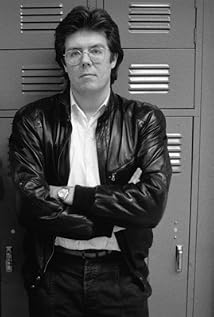
Synopsis
In 1984 John Hughes made his directorial debut with the film, Sixteen Candles. The film led to a multiple-picture contract with Paramount, as well as the creation of his own production house. He continued to create a string of films set in or around high school, including The Breakfast Club, Pretty in Pink, Weird Science and Ferris Bueller's Day Off, all of which boosted the careers of new actors.
In 1968, he graduated from Glenbrook North High School in Northbrook, Illinois, and moved to Tucson to attend the University of Arizona. Hughes dropped out of college his junior year, and returned to Chicago to begin his career as an ad copywriter. During this time he also attempted to write comedy, which led him to write a story inspired by his family trips as a child. The story, "Vacation '58", earned him a job at National Lampoon Magazine. The piece later became the basis for the film, National Lampoon's Vacation (1983). The film became a major hit, putting Lampoon back on the map.
Teen-Themed Films
In 1984, Hughes made his directorial debut with the film, Sixteen Candles, starring a then-unknown Molly Ringwald. Hughes' realistic depiction of high school life was a hit with teens, winning popular praise and critical acclaim. The film led to a multiple-picture contract with Paramount for Hughes, as well as the creation of Hughes' own production house. Sixteen Candles became the first in a string of Hughes films set in or around high school, including The Breakfast Club (1985), Pretty in Pink (1986), Weird Science (1985) and Ferris Bueller's Day Off (1986).
The movies also boosted the careers of several young actors and actresses, who he used repeatedly in his films. The group -- which included Ringwald as well as Emilio Estevez, Anthony Michael Hall, Rob Lowe, Andrew McCarthy, Demi Moore, Judd Nelson, Molly Ringwald and Ally Sheedy -- earned the nickname "The Brat Pack" in a play off of the popular 1950s "Rat Pack."
Branching Out
Hughes branched out in 1987 and directed Planes, Trains & Automobiles
that year, with comedians Steve Martin and John Candy. In 1990, Hughes
brought the movie industry yet another hit with his film, Home Alone, which jumpstarted the career of then-unknown actor Macaulay Culkin. Films such as Curly Sue (1991), 101 Dalmatians (1996) and Drillbit Taylor (2008) also resonated with audiences.
Death
Since 1994, Hughes remained largely removed from the
public sphere. He moved to Wisconsin, and avoided interviews or
photographs. Hughes passed away on August 6, 2009, from a heart attack
while taking a walk in New York City. He was 59 years old. He is
survived by his wife of 39 years, Nancy, two sons, and four
grandchildrenhttp://www.biography.com/people/john-hughes-476258
Did John Hughes have a signature style?
Lighting: Very colorful to indicate the characters feelings or to give an insight on the films storyline
Example: From Ferris Beuller's day off.
|
Sound: Hits with meaningful lyrics that exemplify and support Hughes' themes, and emotions, giving a strong response to the audience.
Example: From the Breakfast club and Plains, Trains and Automobiles
- Simple Mind's Don't You Forget About Me, speaks of abandonment and some of the issues that many 80s teens would have thought about and that were relevant in their lives
- Ray Charles' Mess Around (not quite 80s), a comedic homage to this artist, cheers up Neil and Del, reminds them of their past and eases some of the serious mood
Example: Ferris Beuller's day off
Business men in carnival hats, watching a parade: These otherwise serious men can enjoy some of the silliness that is happening around them, relates to being yourself
Themes: Themes in Hughes' movies include finding the maturity, especially as a teenager whilst growing up learning new things about life. He advocates overcoming differences and finding friends in unusual places.
In addition to maturity, Hughes' movies have themes such as freedom, the ability to be yourself, find yourself, and do whatever you want whilst learning and making your own mistakes.
Example: Ferris Beuller's Day off , Sixteen Candles and The Breakfast Club
- Ferris and Cameron both are advocates of freedom and self-knowledge learning about themselves as teenagers, Ferris since the beginning, and Cameron over the course of Ferris Bueller's Day Off. He defies his father and destroys his car, making him much more self-aware.
- In Sixteen Candles, Farmer Ted aka the Geek, is not aware or does not care about his social status and uses all of his opportunities to get what he wants. This leads him to get with one of the most popular girl's in school.
- The five teenagers in The Breakfast Club, who did not know each other before, share their stories and become very close during their Saturday detention. Through their open-mindedness they learn a lot about themselves and each other. This then allows them to become a group of friends from somewhere they wouldnt have thought would ever happen.
John Hughes was known for his work on teen movies and for helping launch the careers of numerous actors, including Michael Keaton, Molly Ringwald, Anthony Michael Hall, Bill Paxton, Matthew Broderick, and the Brat Pack group.

http://www.telegraph.co.uk/film/what-to-watch/john-hughes-best-movies/
An article that was sent, after John Hughes passed.
Learning Comment
In this task I learnt, how John Hughes used themes very strongly to add emotional responses to his audience. His aimed audience was for teenagers and so his themes were based strongly on learning, growing and maturing. In my own coming of age film I can add a very strong theme that I can personally relate to but also at an audience that can relate to it as well.
He also used music to reflect a character's mood or to give an indication what the movie is about, for example in The Breakfast Club, the main song is Dont you forget about me, listening to the lyrics this definately reflects onto the storyline, with a few teenagers that become friends randomly and they gain a strong relationship with one and another. I added a happy song to the background of my movie (lots of doors) so the audience can get an insight what the movies emotional response is, if it is a comedy, romance, horror etc.
